During the pandemic I saw how people like my own high-school aged daughters were struggling, and I wanted to help. I joined the Learning FA, a new central team being formed to help make Google’s products better for learning. I focused on broad strategic goals (like defining new business areas) and spent a lot of time making our core products – like YouTube, Search and Gemini – more educational. I’ve also built a team of 20+ product designers, engineers and user researchers.
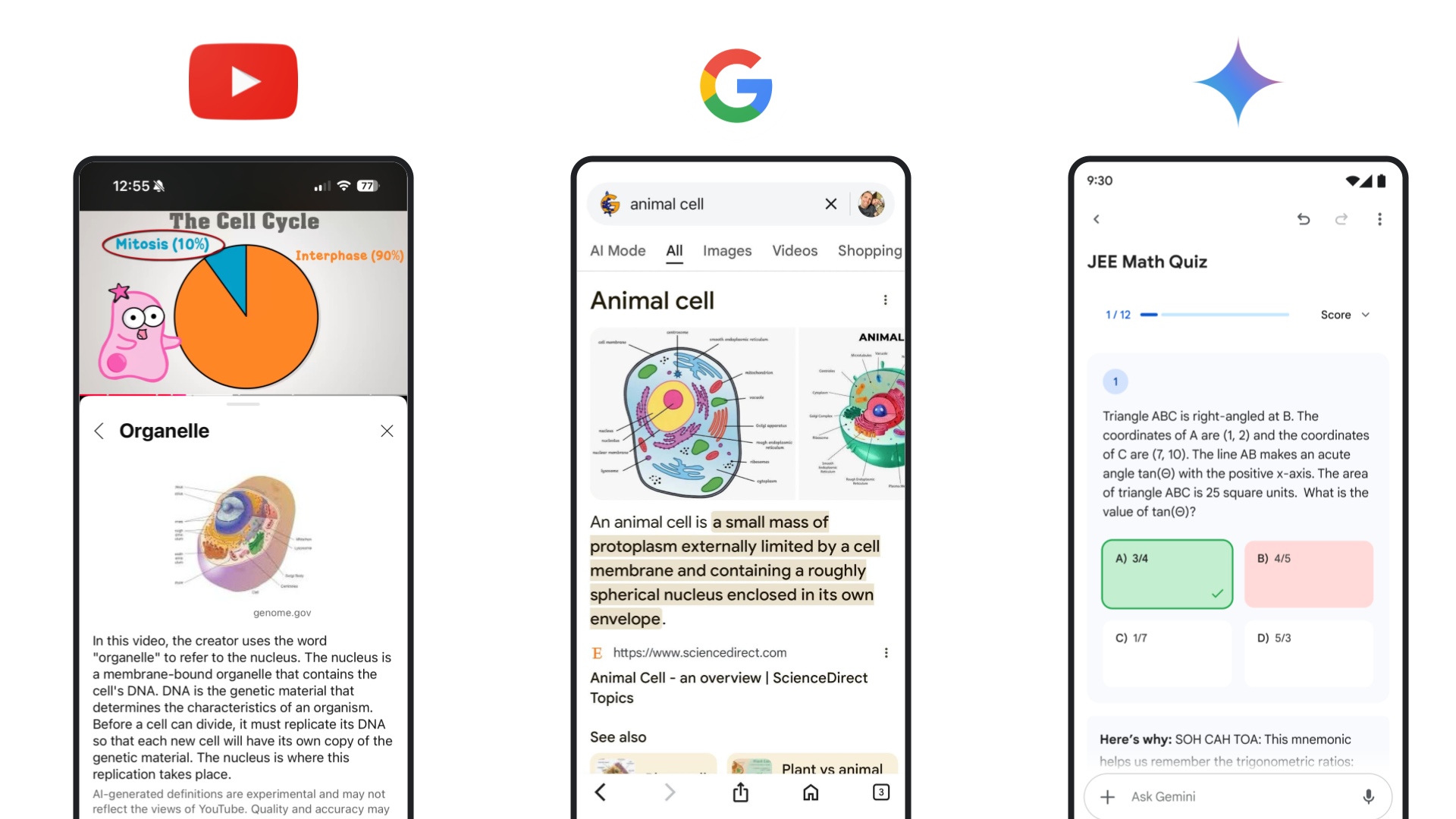
We’ve focused a lot of energy on fulfilling a long-held dream in educational technology: to create a personalized tutor for every learner that’s always available, and free. At Google I/O 2024, we announced LearnLM, our cross-company effort to make Google’s foundational AI models great for teaching and learning, and showed how we’re bringing it to learners with features on Search, YouTube, and Gemini. We’re also building some brand new products designed to help anyone learn anything.
Learn About is a Learning Labs experience that explores how information can turn into understanding by bringing together high-quality content, learning science and chat experiences. Ask a question and it helps guide you through any topic at your own pace — through pictures, videos, webpages and activities — and you can upload files or notes and ask clarifying questions along the way. The project won 6 design awards including iF Design Award, Red Dot Award, Webby Awards (Best User interface, Responsible AI, Best Navigation/Structure), and UX Design Awards. I spoke a few times about how curiosity motivates deeper and more meaningful learning, including Learn About: AI for Curious People at the ASU+GSV AI Show.
I’m proud that Learn About helped demonstrate how genAI products can go beyond text. We’re bringing a lot of that magic to our scaled products that reached hundreds of millions of learners every day.
Google’s AI Overviews let learners get an overview for almost any question, and dive deeper in AI Mode.

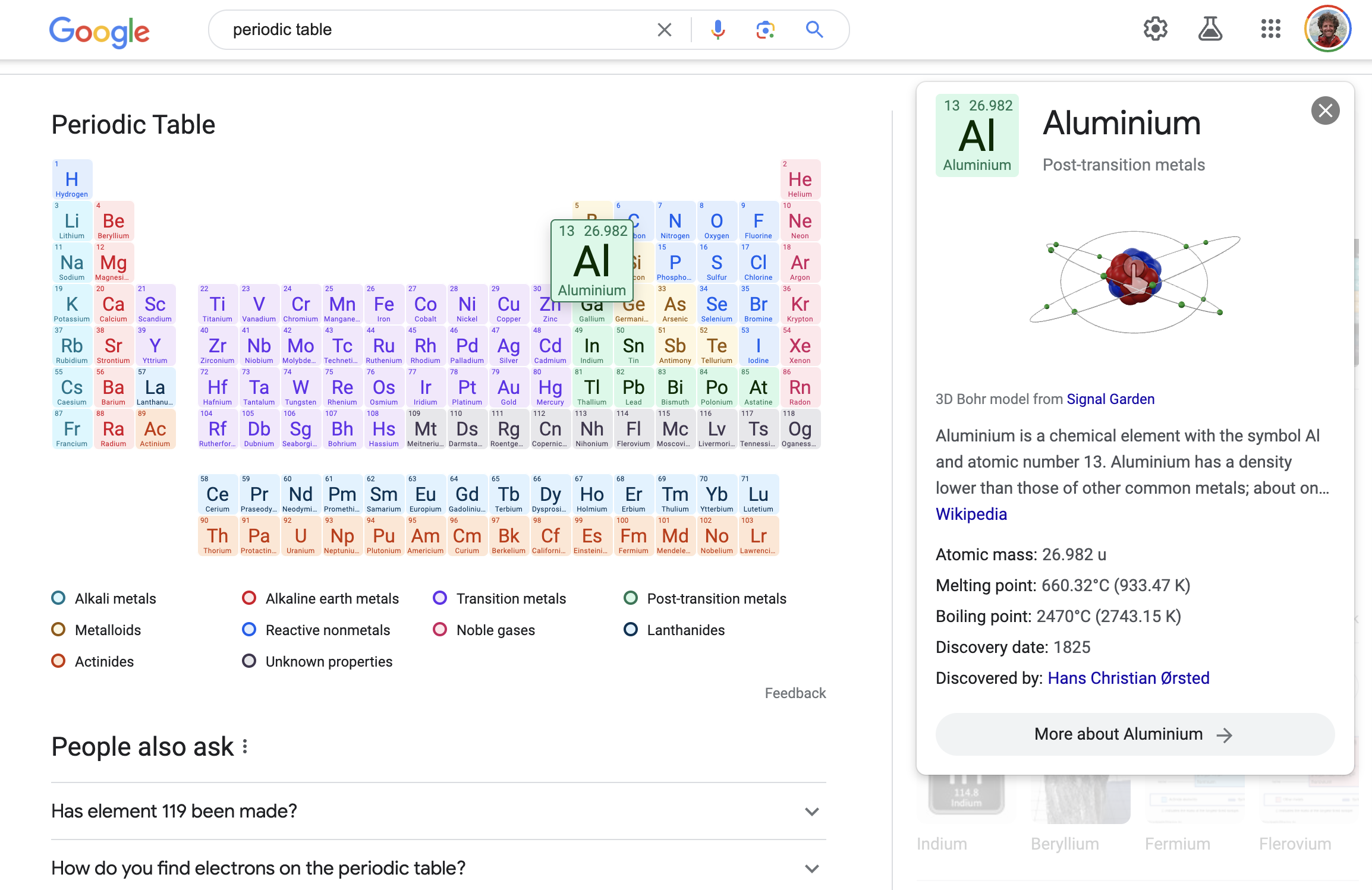
Periodic table lets people explore an interactive version of this classic chemistry mainstay. Clicking on any element opens an interactive 3d Bohr model with key facts about the element. People can even view an AR version of this model right in their living rooms or classrooms with a mobile phone.
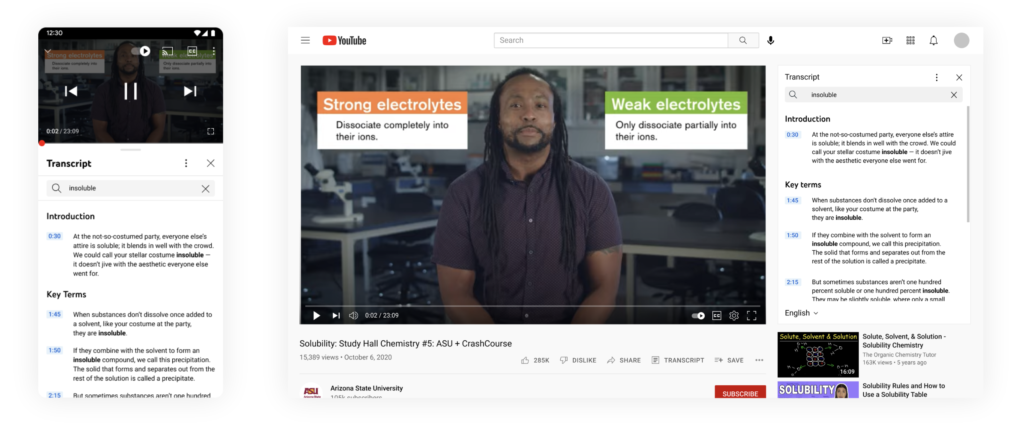
YouTube is known for its endless library of how-to videos, but did you know that millions of people also use it to help them with their schoolwork every day? But it’s not always easy, and people told us it could be distracting. So, we removed distractions that used appear alongside academic videos, and now suggest only relevant academic videos when you’re studying. We also added new features like searchable transcripts that help students quickly hone in to the parts of videos that answer their questions.
On Gemini, we’ve introduced interactive quizzes and a learning mode where the AI asks you questions to make sure you really understand what you’re studying.
This work is both rewarding, and fun. Over 20 years ago, I made exhibits at the San Francisco Exploratorium and loved how kids would playfully explore, experience and learn new ideas driven by their curiosity. At Google, I love to ask how we can bring playful exploration to learners’ experiences with our products. Because who said learning can’t be fun?

